
AWS Cloud
Cost Management, FinOps & Billing Automation
Optimize AWS spend and automate complex billing workflows with a unified platform built for MSPs, cloud resellers, and enterprises managing AWS at scale. Aquila Clouds brings together cloud cost visibility, cost allocation, forecasting, anomaly detection, usage-based billing, and automated invoicing in one platform.
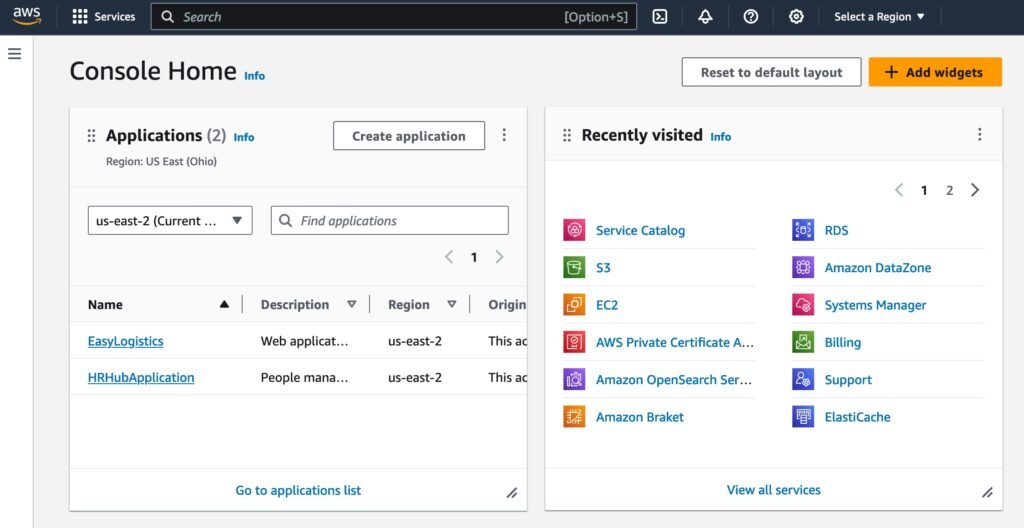
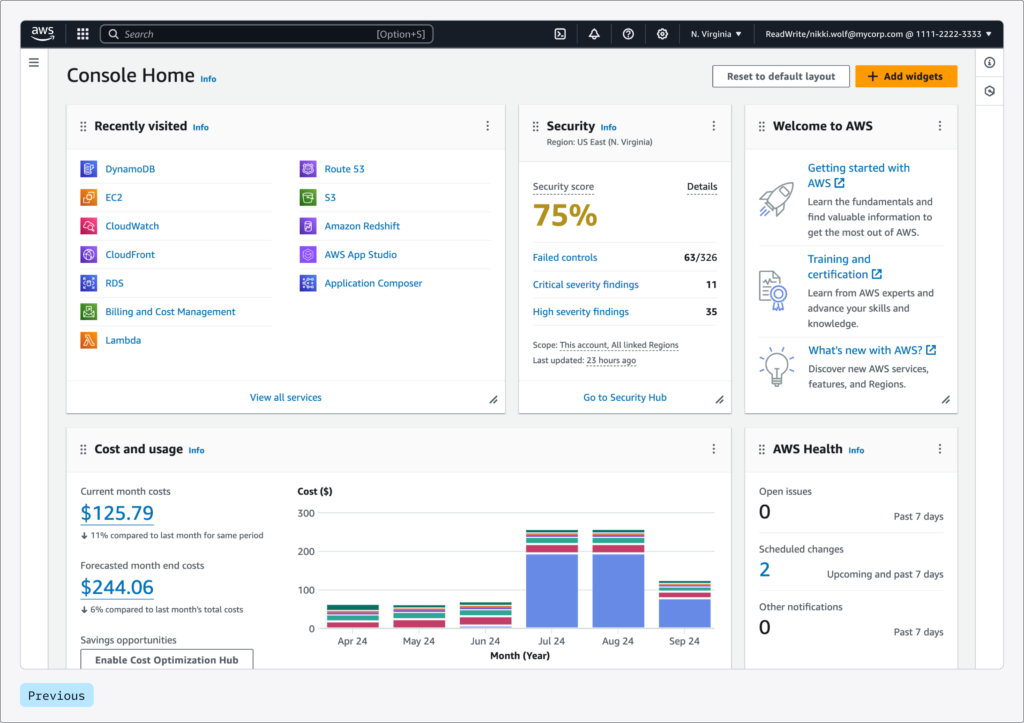
Control AWS costs
and simplify billing from one platform
Managing AWS costs is already complex, but it becomes even harder when MSPs and cloud service providers must also reconcile pricing, apply markups, generate invoices, and explain charges to customers. Aquila helps teams move beyond disconnected FinOps and billing tools by combining AWS cloud cost management, optimization insights, and billing automation in a single operating layer.
For MSPs, resellers, and enterprise cloud teams, that means better cost visibility, stronger accountability, more accurate forecasting, and faster billing operations without manual reconciliation across systems.
What teams can achieve with Aquila on AWS
- Improve AWS cloud cost visibility across accounts, teams, and customers.
- Strengthen cost allocation, chargeback, and showback for FinOps maturity.
- Identify savings opportunities and support better AWS cost optimization decisions.
- Forecast AWS spend more accurately and reduce billing surprises.
- Automate invoice generation and reduce manual billing effort.
- Apply custom pricing rules and support usage-based billing models for MSPs.
- Improve profitability analysis and customer billing transparency.
FAQ
Aquila for AWS
Aquila supports AWS FinOps use cases including cloud cost visibility, cost allocation, budgeting, forecasting, optimization, and governance. Its broader platform positioning also connects FinOps with billing operations for organizations that need both spend control and downstream invoicing workflows.
Both, but the strongest differentiation is for MSPs, cloud resellers, and cloud providers. Aquila’s BillOps product is specifically positioned around billing automation, usage-based pricing, invoice generation, and pricing flexibility for those business models.
Aquila automates key billing workflows with usage-based billing, multi-cloud billing support, automated invoice generation, pricing rules, rate-card management, and billing analytics. That helps reduce manual effort, improve invoice accuracy, and make complex AWS billing easier to manage at scale.
For MSPs and cloud resellers, AndromedaFinAI functions as a BillOps engine alongside its FinOps capabilities, covering usage rating, invoice generation, reconciliation, and per-customer margin analysis in one platform. Rather than relying on spreadsheets or fragmented billing exports, MSPs can configure custom rate cards, markups, and bundled service definitions inside AndromedaFinAI and have the platform automate the calculation and reconciliation of customer invoices each billing cycle. Anomaly detection specifically tuned for billing data surfaces unbilled services, misapplied pricing rules, and usage patterns that don't match contracted terms, protecting revenue that would otherwise leak silently. Margin dashboards give account managers and finance leaders visibility into profitability per customer, per cloud, and per service line, including the increasingly important AI and GPU workloads that MSPs are now reselling or managing on behalf of customers. Automated reconciliation workflows in AndromedaFinAI have reduced billing cycle times from two weeks to under four days for MSPs managing 100+ customer accounts.
AndromedaFinAI uses machine learning across three financial intelligence layers. First, anomaly detection continuously monitors cloud and AI workload spend patterns to identify statistically significant deviations. Second, the platform's forecasting models learn from historical usage patterns across multi-cloud, Kubernetes, and AI workloads to produce more accurate forward-looking spend projections than rule-based tools. Third, AI cost optimization surfaces prioritized rightsizing, commitment, and efficiency recommendations based on actual usage data, ranked by financial impact so teams work on what delivers the most savings. All of these insights are accessible through AndromedaFinAI's dashboards and through Sherlock, the conversational agent embedded within the platform, which can explain anomalies, summarize forecast variances, and walk teams through optimization opportunities in plain language.
Sherlock is a conversational FinOps agent that lives inside the AndromedaFinAI platform; it is not a separate product or standalone AI assistant. It has direct access to the platform's full financial data model, which means its answers are grounded in real cost, usage, billing, and anomaly data rather than general knowledge. Teams can ask Sherlock questions like "What's driving our GPU spend increase this month?", "Which customers are approaching their budget limits?", "Show me the top three optimization opportunities by savings potential", or "Summarize last month's billing anomalies and how they were resolved." Beyond answering queries, Sherlock can initiate platform actions from within the conversation, such as drafting an optimization brief, creating a Jira ticket for an anomaly, or flagging a billing discrepancy for escalation through a connected ITSM integration. This makes AndromedaFinAI's financial intelligence actionable in real time, without requiring users to navigate multiple dashboards to find and act on insights about their cloud and AI spend.
AndromedaFinAI is designed to complement and accelerate a mature FinOps practice, not replace the processes a Cloud Center of Excellence has already built. The platform maps directly to the Inform-Optimize-Operate framework: it provides the unified financial data layer many teams currently assemble manually, adds ML-based intelligence on top of that data, and automates recurring operational tasks. For organizations earlier in their FinOps journey, AndromedaFinAI accelerates maturity by establishing consistent cost allocation taxonomies, showback/chargeback practices, and governance policies across multi-cloud and AI workloads from day one. Role-based views ensure that finance leaders, engineering teams, and executive stakeholders each see the financial data relevant to their decisions without requiring every persona to become an expert in cloud billing data structures.
On the cloud cost side, AndromedaFinAI ingests billing and usage data from AWS, Microsoft Azure, and Google Cloud Platform, as well as Kubernetes cost data via cluster-level integrations. For AI and LLM workloads, the platform connects to GPU compute billing from major cloud providers and can attribute costs to specific training jobs, inference endpoints, and generative AI pipelines based on resource tags and workload identifiers. On the BillOps side, AndromedaFinAI integrates with common billing systems, CRMs such as Salesforce, and ITSM tools such as ServiceNow and Jira to push financial alerts, anomaly notifications, and optimization recommendations into existing operational workflows. The platform is built for environments where financial data is inherently fragmented across clouds, teams, and business units, and its core function is to normalize, unify, and make that data actionable for cloud financial management.
Optimize AWS spend
and automate billing with one platform
and automate billing with one platform
Unify AWS cloud cost management, FinOps, and billing automation so your team can reduce waste, improve accountability, streamline invoicing, and scale customer billing with confidence.